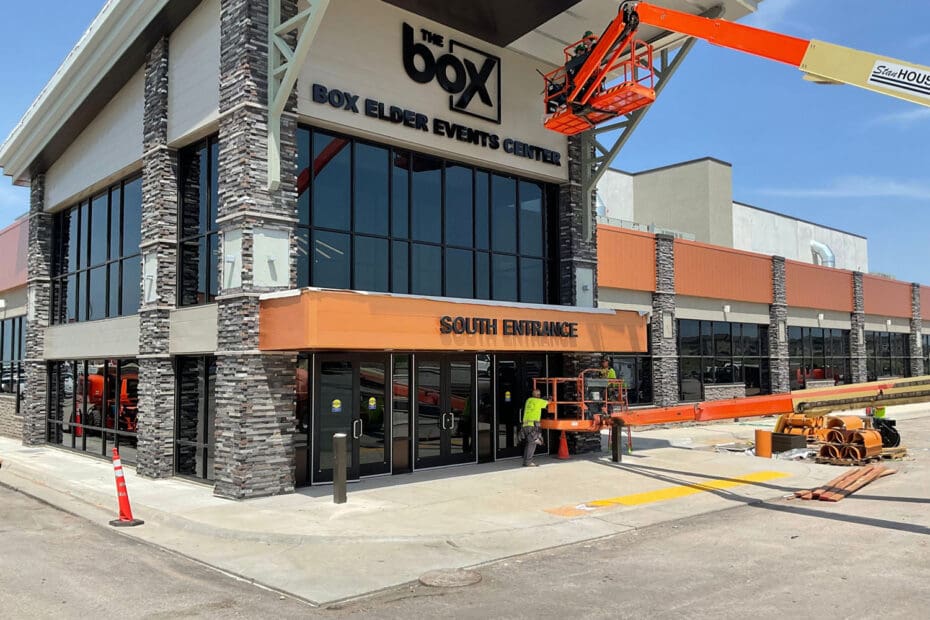
Automatic entrance systems deserve the same thoughtful attention as the spaces they serve: careful selection, qualified inspection, and ongoing care. At Hagen Glass, our priorities are safety, compliance, accessibility, and long-term performance – not simply an attractive opening. For business owners considering automatic entrance systems in Rapid City, South Dakota, we recommend treating certification, preventative maintenance, and accessible design as connected parts of one plan.
Our automatic entrance offerings include sliding and swing doors, ADA-compliant storefront doors, and specialized configurations. The right conversation begins with how people will use the entrance, then moves to appearance, controls, and ongoing responsibilities.
What Does AADM Certification Mean for Automatic Entrance Systems?
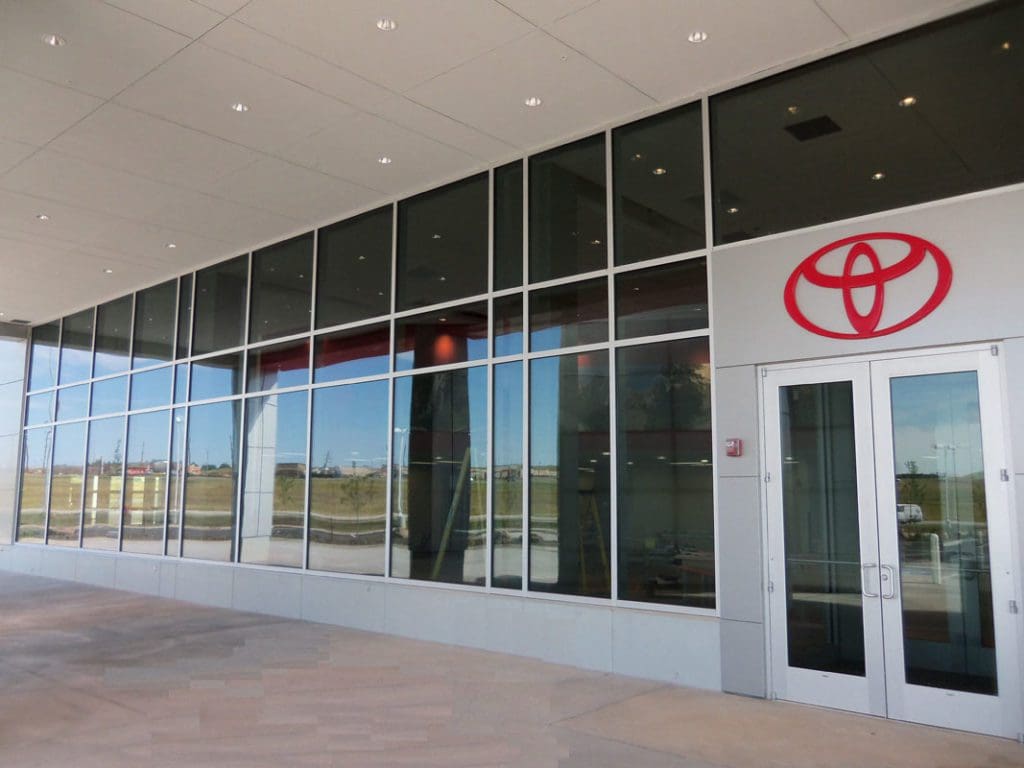
The credential often searched for as “AADM certification” is properly called AAADM certification, referring to the American Association of Automatic Door Manufacturers. Its inspector certification program prepares qualified individuals to check automatic door systems against relevant industry safety standards. It is an inspection credential, not a blanket guarantee that every entrance or building meets every accessibility requirement.
That distinction matters when comparing proposals. Ask who will inspect the completed entrance, whether that individual holds current certification, and which standards apply to the equipment. AAADM requires annual certification renewals with a testing component, making current status more meaningful than an old training certificate.
We encourage owners to separate three decisions: selecting equipment, verifying its operation, and planning its care. Do not let an appealing product description replace a clear explanation of inspection responsibilities.
Before approving work, ask:
- Inspector credentials: Who will perform the inspection, and how can current certification be verified?
- Inspection scope: Which door functions and applicable standards will be evaluated?
- Owner instruction: Who will explain daily safety checks and provide the operating manual?
- Follow-up: How should staff report a concern, and who authorizes corrective work?
Use the answers to clarify expectations before installation, rather than resolving responsibilities after handover.
Are Automatic Entrance Doors Automatically ADA-Compliant?
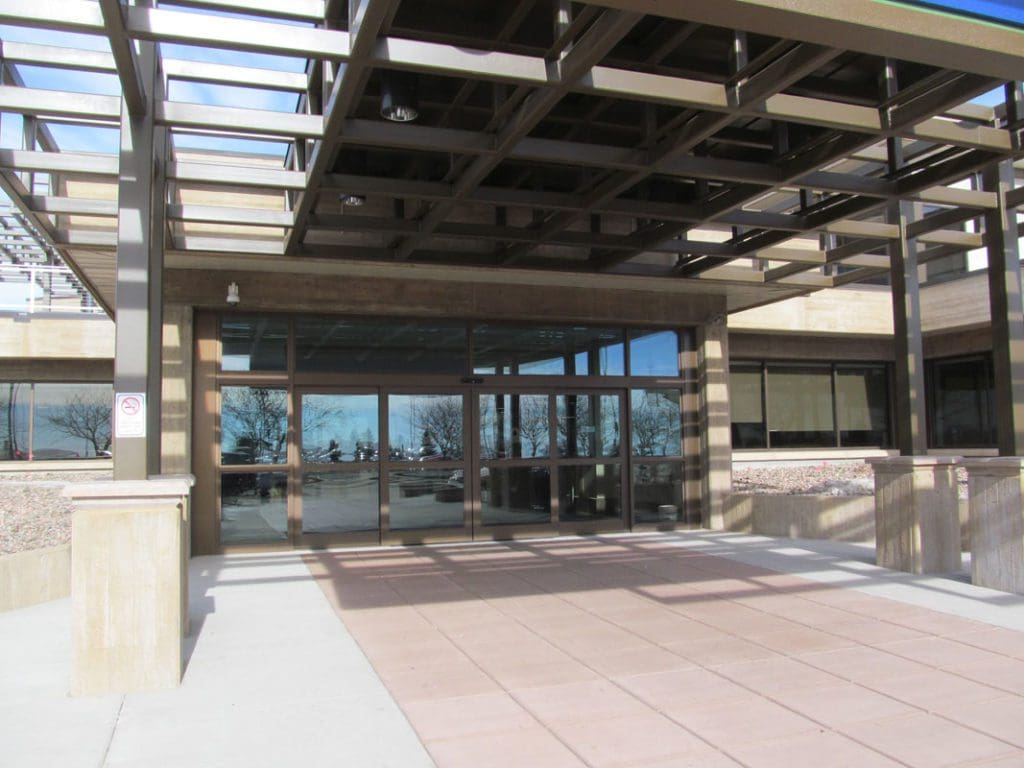
No. Automatic entrance doors must meet applicable accessibility requirements as part of the complete entrance. The U.S. Access Board identifies requirements covering clear opening width, thresholds, controls, doors in series, and certain power-off and emergency conditions. Adding an operator does not, by itself, establish that the entrance is accessible.
For example, the ADA Standards require automatic doorways to provide a minimum clear opening of 32 inches in both power-on and power-off modes. Manually operated controls must meet operable-part requirements, with adjacent clear floor space outside the door’s swing. These are practical design considerations, not details to leave until the final walkthrough.
Imagine a visitor approaching a push plate with a walker. Our design recommendation is to review the entire sequence: approaching the control, activating it, waiting for the door, and continuing inside. Ask the project team to show that sequence on the plan instead of considering the door leaf alone.
Include these items in the accessibility review:
- Approach and circulation: Review the accessible route and keep its relationship to the entrance clear.
- Opening and threshold: Verify the actual usable opening and changes in level.
- Controls: Check reach, operation, and clear floor space.
- Vestibule layout: Review spacing between successive doors.
- Power-off operation: Confirm the applicable clearance and emergency-opening provisions.
ADA-compliant doors belong within a coordinated accessibility plan. Have the project’s qualified professionals confirm the requirements for the specific building and scope of work.
Select the Door Configuration Before Refining the Appearance


Take a look at our automatic entrances page where we describe sliding, swing, folding, telescopic, revolving, and hermetic doors. Sliding systems suit busy entrances; swing doors retain a more familiar door arrangement. Telescopic configurations use overlapping sliding panels where available space and opening width need careful consideration.
Start your design brief with a floor plan and a description of daily use. Identify the principal users, anticipated deliveries, nearby waiting areas, and any access-control expectations. Then ask which configuration best supports those needs before settling on frame finishes or surrounding materials.
We recommend evaluating appearance from both sides of the entrance. Consider how the framing relates to adjacent glazing, how controls fit within the wall layout, and where required labels will remain visible. Treat those elements as part of the composition rather than late additions.
Revolving doors need particular care in accessibility planning. The Access Board states that revolving doors, including automatic versions, cannot form part of an accessible route; a compliant manual or automatic door must also be provided at an accessible entrance.
Build Preventative Maintenance into The Ownership Plan
Preventative maintenance should begin with the manufacturer’s instructions and a clearly assigned owner responsibility.
Keep inspection and maintenance distinct in your planning. Ask the provider to explain what the inspection evaluates, what routine service includes, and which findings would require separate repair authorization. Avoid assuming that one scheduled visit covers every task.
An ownership plan should include:
- A named responsible person. Assign a primary staff member and a backup to coordinate checks, records, and service requests.
- System-specific instructions. Keep the owner’s manual available and arrange a demonstration of the prescribed daily check.
- A service calendar. Record inspection dates and confirm maintenance intervals against manufacturer guidance and operating conditions.
- A simple issue log. Note the date, observed behavior, and action taken without attempting to diagnose the mechanism.
- A handover process. Include entrance responsibilities whenever staff or property management changes.
Manufacturer guidance also emphasizes maintaining safety labels, checking the surrounding floor area, and looking for damaged panels or insecure thresholds. Follow the instructions for the actual equipment rather than borrowing a checklist from a different door type.
Our recommendation is to budget for this care alongside the entrance itself. Ask for a clear explanation of ongoing responsibilities before making the purchase decision.
Keep Automatic Door Repair Separate from DIY Work
For an inspired DIY enthusiast, entrance maintenance may look like another adjustment project. However, we warn owners not to attempt repairs or adjustments when an automatic door malfunctions or fails its prescribed safety check. Contact a qualified automatic door professional like Hagen Glass to ensure proper safety measures are accounted for if your automatic entrance is breaking down.
Do not experiment with sensor positioning, opening speed, or control settings to work around a problem. Instead, prepare useful information for the service provider: identify the entrance, describe what happened, and note whether the behavior was repeated or intermittent. Report any recent impact, power interruption, or nearby work without assuming it caused the fault.
Coordinate the Entrance with the Complete Design

At Hagen Glass, we recommend bringing entrance requirements into the design conversation early. Share drawings, photographs, circulation plans, and accessibility concerns together. This gives the discussion a useful starting point without presuming that a preferred door style will suit every opening.
For designers, prepare a brief that describes both the visual intention and the functional priorities. For owners, identify who will operate, check, and manage the system after handover. If you are new to automatic entrances, ask for unfamiliar terms to be explained before approving the scope.
Use the proposal review to settle responsibilities for electrical coordination, surrounding finishes, controls, inspection, documentation, and owner instruction. Ask what is included and what requires another project professional. Clear scope is especially important when an entrance upgrade forms only one part of a larger renovation.
We suggest keeping one central project record containing the approved proposal, equipment information, operating instructions, inspection documents, and service contacts. Make accessibility and ongoing care part of the completion discussion, not a separate task to revisit later.
Plan Your Automatic Entrance with Hagen Glass
A successful entrance plan connects appearance with safe operation, accessible use, and ongoing care. Keep those priorities together when comparing options, approving work, and preparing for ownership.
For automatic entrance systems in Rapid City, contact Hagen Glass to discuss your project. Schedule your free consultation and estimate to explore automatic entrances and ADA-compliant storefront door options with our team.